

 Çerez Tercihleri
Tarama deneyiminizi geliştirmek, kişiselleştirilmiş içerik sunmak ve trafiğimizi analiz etmek için çerezler kullanıyoruz. Lütfen aşağıdan tercihlerinizi seçin.
Assessing Donor Capacity
- Hair Transplantation Is More Than a Graft Number
- Understanding Hair Transplantation
- Assessing Donor Capacity
Assessing Donor Capacity
What Is Donor Capacity?
Donor capacity refers to the amount and characteristics of hair-bearing tissue that may be considered for transplantation while preserving an acceptable appearance in the donor region.
It is not simply the total number of follicles visible at the back and sides of the scalp. An assessment must consider which follicles are likely to remain stable, how they are distributed, what may safely remain after harvesting and whether future hair loss could create additional needs.
Donor capacity varies considerably between individuals. A graft estimate provided without an appropriate assessment should therefore be understood as preliminary rather than definitive.
The Donor Area Is a Limited Resource
Follicular units removed from the donor area do not regenerate in their original locations. Every extraction changes the remaining distribution to some degree.
The objective is not to remove the highest possible number of grafts. It is to determine whether an appropriate number can be obtained while maintaining visual continuity and preserving reasonable options for the future.
A responsible assessment considers both what may be harvested and what must remain.
Identifying a Stable Donor Region
Hair at the back and sides of the scalp is often more resistant to androgenetic hair loss than hair in other regions. However, the dimensions and stability of this area are not identical in every person.
Hair that appears suitable during a casual examination may be located near a boundary that could become less stable as hair loss progresses. Family history, age, current hair-loss pattern and evidence of miniaturization may therefore affect how conservatively the donor region is defined.
A broadly drawn donor boundary should not automatically be interpreted as a safely usable area.
Density Should Be Measured, Not Assumed
Donor density describes the number of follicular units within a defined area. It may vary between different parts of the same scalp.
Visual inspection alone can be misleading because hair length, styling, colour, curl and shaft thickness may make an area appear fuller or thinner than it is.
Assessment may include examination or magnified imaging of several representative zones. Measurements should be interpreted together rather than relying on a single point that may not reflect the entire donor region.
Follicular-Unit Composition
A follicular unit may contain one, two, three or occasionally more hairs. Two donor areas with a similar follicular-unit density may therefore provide different total numbers of hairs.
The proportion of single- and multiple-hair units can influence:
The visual coverage associated with a graft number
The selection of grafts for different recipient zones
Hairline transitions
Mid-scalp coverage
The amount of donor tissue required for a proposed plan
Graft count and hair count are related measurements, but they are not interchangeable.
Hair Characteristics Influence Visual Capacity
Donor assessment should include more than the number of follicular units. Hair characteristics can influence how much visual coverage transplanted hair may provide.
Relevant characteristics may include:
Hair-shaft calibre
Straight, wavy or curly texture
Hair and scalp colour contrast
Growth direction
Average number of hairs within each follicular unit
Existing donor length and preferred hairstyle
Thicker or curlier hair may create a different visual effect from finer, straighter hair even when the graft counts are similar. This does not make one donor area universally better; it changes how the available resource may be planned.
Miniaturization and Donor Stability
Miniaturization occurs when hair follicles progressively produce finer and shorter hairs. If significant miniaturization is present within a proposed donor region, its long-term stability may require further consideration.
Harvesting from an area that later becomes thinner may affect both the appearance of the donor region and the persistence of transplanted coverage.
Magnified examination can contribute useful information, but no device or single measurement can predict future stability with absolute certainty. Findings should be interpreted together with medical history, age, family pattern and the current course of hair loss.
Scalp and Tissue Characteristics
Skin and tissue characteristics may also influence an extraction plan. These may include:
Scalp condition
Previous scars
Follicular orientation beneath the skin
Differences in tissue firmness or mobility
Active inflammation or infection
Previous operations or trauma
Healing history
An active or unexplained scalp condition may require further assessment before elective surgical planning.
Previous Harvesting Must Be Considered
A donor area that has previously been used should not be evaluated as though no extraction has taken place.
Assessment may need to consider:
The location and distribution of previous harvesting
Visible differences in density
Existing linear or circular scars
Areas of uneven extraction
Changes in hair direction or styling options
Records from earlier procedures, when available
The amount and distribution of hair that remains
The number reported from a previous procedure does not necessarily reveal the complete effect on the donor area. Current examination remains important.
Donor Capacity Is Not a Universal Graft Number
There is no single graft number that is appropriate for every person. A figure used in a package or general advertisement cannot account for individual donor dimensions, density, hair characteristics, recipient-area requirements or future loss.
Even after assessment, the proposed number may be expressed as an approximate range. Findings during the procedure can require the plan to be adjusted.
A responsible estimate should explain how it was reached and what limits were considered.
Recipient Needs Affect Donor Planning
Donor capacity should not be assessed separately from the recipient plan.
A large recipient area, low hairline position or an attempt to provide uniform density across the frontal region, mid-scalp and crown may require more hair than the donor area can reasonably provide.
Planning may therefore require prioritization. The proposed use of donor hair should reflect:
The regions that matter most to the individual
The visual effect expected from each zone
Existing hair in the recipient area
Possible progression of hair loss
The likelihood of future procedures
The amount of donor hair that should remain available
Theoretical donor availability and clinically appropriate use are not always the same.
Why Future Planning Matters
Hair loss may continue after transplantation. A plan focused only on the current area of concern may use hair that could be important later.
Long-term considerations may be particularly relevant when:
Hair loss began at a younger age
The pattern is still progressing
Family history suggests more extensive loss
Existing hair shows signs of miniaturization
The crown requires extensive coverage
Previous procedures have already used part of the donor supply
Preserving options for the future can be more important than maximizing a single session.
Questions Worth Asking
Before accepting a donor-harvesting plan, patients may wish to ask:
How was my donor capacity assessed?
Were several donor zones examined?
Was follicular-unit density measured?
Were hair calibre and follicular-unit composition considered?
Is there evidence of miniaturization within the proposed donor region?
How were the boundaries of the stable donor area determined?
How does my previous procedure history affect the plan?
What amount and distribution of hair should remain?
How might future hair loss change my needs?
Is the proposed graft number a target or an approximate range?
What would cause the extraction plan to be modified?
A transparent assessment should explain both the opportunities and limitations of the donor area.
Donor capacity and medical suitability vary between individuals. Online information and photographs cannot replace direct assessment by appropriately licensed healthcare professionals.
References
International Society of Hair Restoration Surgery. The Donor Site: Savings and Loan of Hair for Transplantation.
International Society of Hair Restoration Surgery. Hair Loss and Hair Restoration Require Personal and Individual Attention.
International Society of Hair Restoration Surgery. FUE Hair Transplant: Benefits, Process and Recovery.
External sources are provided for general educational reference. No affiliation or endorsement is implied.
Diğer Hizmetler

Understanding Scarred Scalp Tissue
Scarred scalp tissue may

Facial Proportions & Hairline Position
Hairline position should
What Matters in Hair Transplantation
Hair transplantation shou

Medical Assessment & Candidacy
Suitability for hair tran

Positioning During Prolonged Procedures
Hair transplantation may

The Role of the Nurse in Telehealth-Based Hair Transplant Follow-Up
Nurse-led telehealth foll

Master’s Thesis Research: Wound Healing and Infection Prevention in Hair Transplantation
This page introduces a pu

Assessing Donor Capacity
Donor capacity cannot be

Balanced Extraction & Homogeneous Distribution
Donor preservation depend
Hairline Shape & Temporal Design
Hairline shape should con

Suitability, Donor Capacity and Staged Planning
Suitability for hair tran

Non-Pharmacological Comfort Support
Comfort during a prolonge

Burn Alopecia: Nursing Care and Psychosocial Support
Burn-related alopecia may
Donor Area Preservation
The donor area is a limit

Understanding FUE and DHI
FUE describes how follicu

Individualized Planning & Natural Hairline Design
Hairline design should be

Graft Numbers, Density & Distribution
A graft count alone does

Natural Irregularity & the Transition Zone
A natural-looking hairlin

Healing, Follow-Up and Realistic Expectations
Healing in scarred scalp
When Beard Donor May Be Considered
Beard hair may be conside

Complications, Patient Safety and Forensic Evaluation
Patient safety in hair tr

Direction, Angle & Density Transitions
Hair does not emerge from
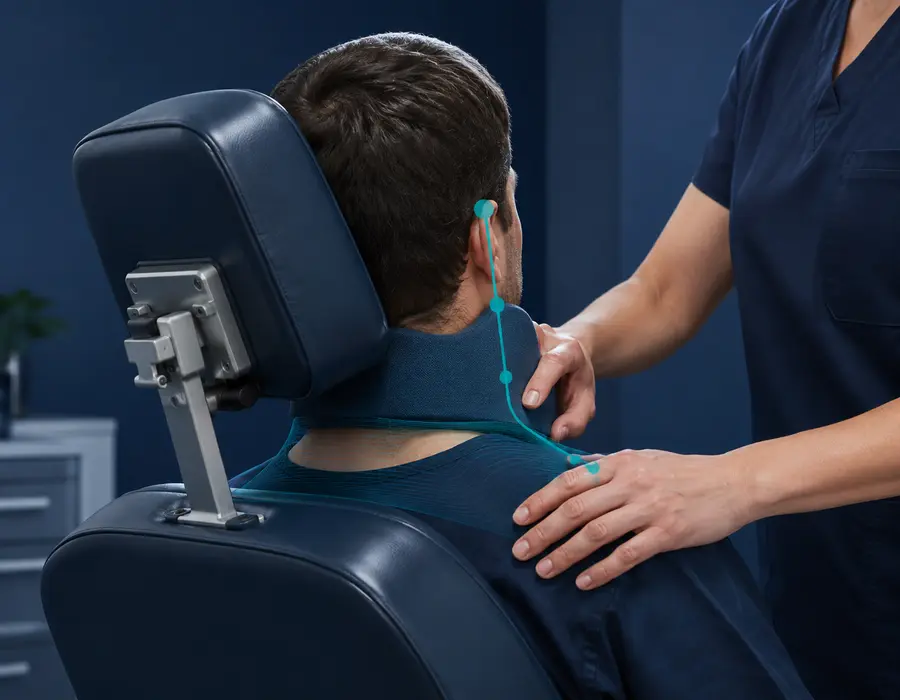
Patient Comfort & Physiotherapy Support
Hair transplantation may

Who Performs Each Stage?
Hair transplantation invo
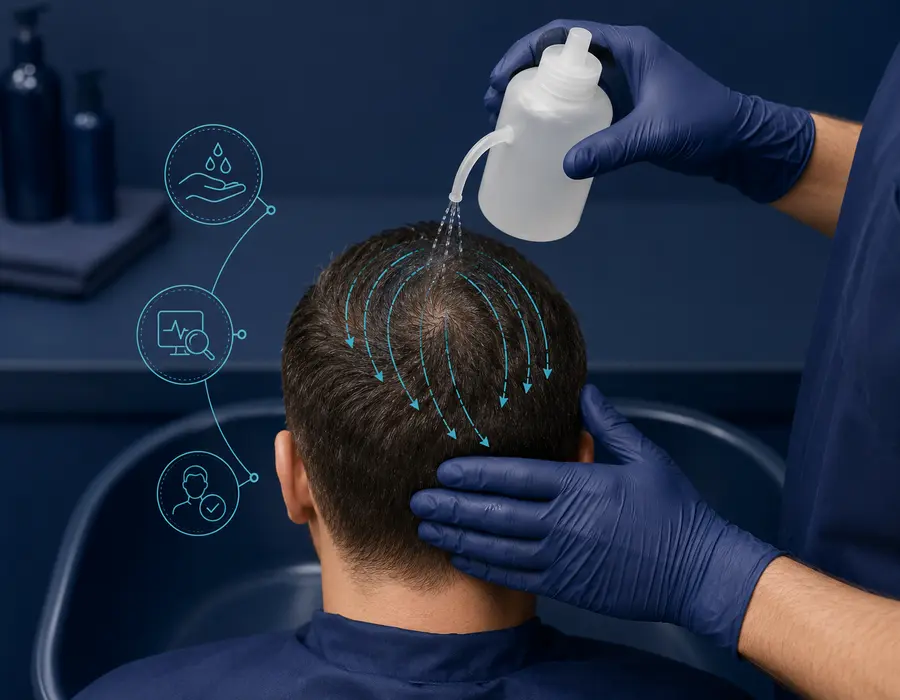
Aftercare & Structured Follow-Up
The period after hair tra

Planning for Women & Different Hair-Loss Patterns
Hair loss in women may pr

Risks, Limitations & Realistic Expectations
Hair transplantation is a
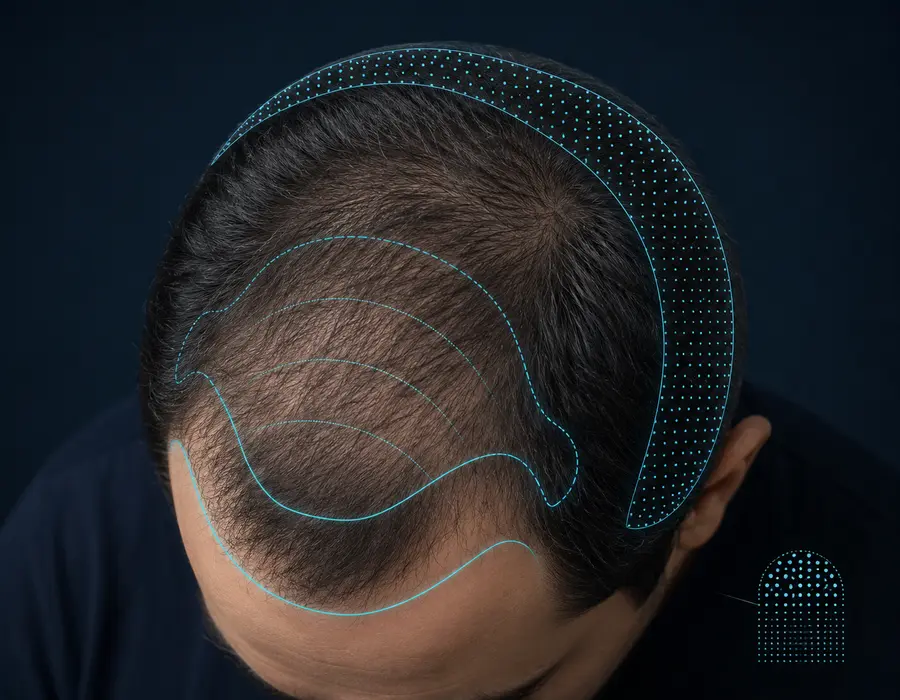
Long-Term Planning & Future Hair Loss
Pattern hair loss may con

Academic Research & Clinical Insights
Easesthetic’s academic fo
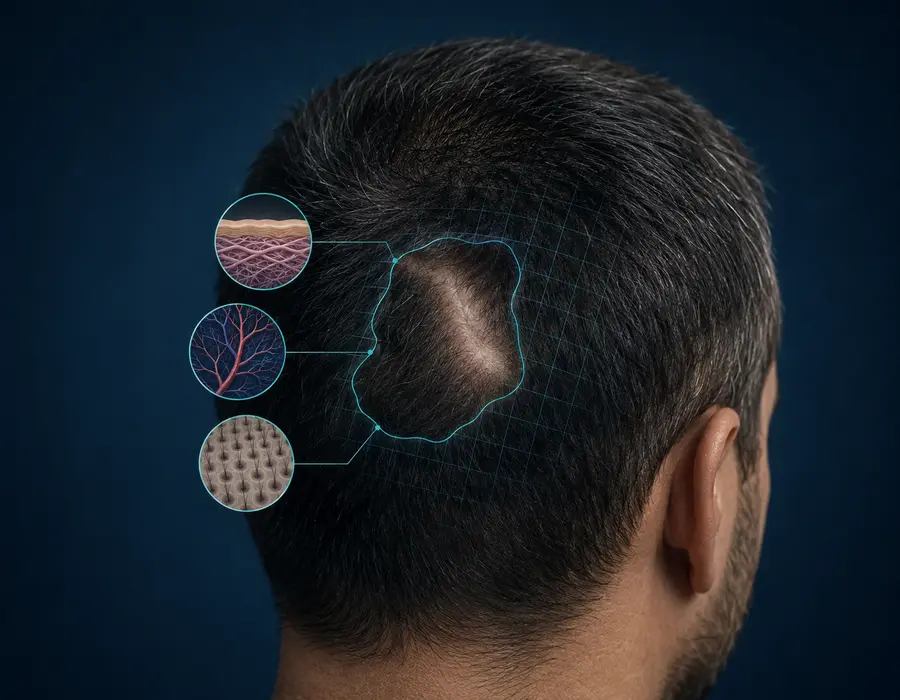
Hair Transplantation in Scarred Tissue
Hair transplantation in s
Frequently Asked Questions