

 Çerez Tercihleri
Tarama deneyiminizi geliştirmek, kişiselleştirilmiş içerik sunmak ve trafiğimizi analiz etmek için çerezler kullanıyoruz. Lütfen aşağıdan tercihlerinizi seçin.
Direction, Angle & Density Transitions
- Hair Transplantation Is More Than a Graft Number
- Understanding Hair Transplantation
- Direction, Angle & Density Transitions
Direction, Angle & Density Transitions
Direction, Angle & Density Transitions
A hairline is more than a drawn boundary. Its visual coherence also depends on how individual hairs emerge from the scalp, the direction in which they travel and how density changes between neighbouring regions.
These characteristics are not uniform across the scalp. They vary between the central hairline, lateral frontal areas, temporal regions and the zones located further behind the leading edge. For this reason, recipient-area planning should be adapted to the individual rather than based on a repeated standard pattern.
Angle and Direction Are Different
Although the terms are sometimes used interchangeably, angle and direction describe different characteristics.
Angle refers to how closely a hair emerges in relation to the surface of the scalp.
Direction refers to where the hair points after leaving the scalp.
Orientation also needs to consider the natural curvature and behaviour of the hair shaft.
A hair may point towards an appropriate region while still emerging at an angle that is inconsistent with the surrounding hair. Conversely, a suitable emergence angle does not compensate for a direction that conflicts with the existing growth pattern.
These variables therefore need to be considered together.
Existing Hair Provides the Reference Pattern
When existing hair is present, its direction, angle, calibre, wave or curl pattern can provide useful planning information.
Assessment may include:
The direction of hairs immediately behind the proposed hairline
Differences between the central and lateral frontal regions
Temporal hair orientation
Changes around a natural parting pattern
Hair curvature and the way longer shafts lie on the scalp
Areas of miniaturization or continuing hair loss
The objective is not to impose a geometrically identical arrangement. It is to understand how the planned area may relate to the person’s existing anatomy and hair behaviour.
Direction Changes Across the Frontal Region
Natural hair does not travel in one uniform direction across the entire frontal scalp.
Depending on the individual pattern:
Central hairs may project mainly forward.
Direction may gradually change towards the lateral frontal areas.
Temporal hairs commonly follow a more lateral and downward course.
Parting patterns may create local changes in orientation.
Curly or wavy hair may require consideration of shaft curvature as well as its visible direction.
Abrupt changes between these regions can appear disconnected. Planning therefore involves creating continuity across neighbouring zones rather than treating each point as an isolated recipient site.
Why Emergence Angle Matters
The emergence angle influences how the hair lies against the scalp and how neighbouring shafts interact visually.
An unnecessarily upright arrangement may expose more scalp between hairs and may differ from the flatter orientation commonly observed near parts of the frontal and temporal hairline. An excessively flat or incorrectly oriented arrangement may also conflict with existing hair and affect future styling.
There is no universal angle that is appropriate for every person or every region. Skin characteristics, existing hair direction, local anatomy, hair curvature and the area being planned all need to be evaluated.
Density Should Change Gradually
Natural density is not perceived as a uniform wall of hair. The leading edge generally interacts with a transition zone, followed by areas with greater visual coverage.
A planned density transition may consider:
A softer and less concentrated leading edge
Progressive visual coverage behind the hairline
The distribution of single- and multi-hair follicular units
Hair-shaft calibre
Colour contrast between the hair and scalp
Straight, wavy or curly hair characteristics
The amount and condition of existing hair
Available donor capacity
This does not mean that every area should receive the same number of grafts or the same spacing. The visual contribution of a follicular unit depends on several interacting characteristics.
Numerical Density Is Not the Same as Visual Coverage
Two people with a similar number of follicular units may not have the same visual appearance.
Perceived coverage can be affected by:
Hair calibre
Hair colour and scalp contrast
Curl or wave
The number of hairs within each follicular unit
Hair length and styling
Direction and emergence angle
The condition of surrounding native hair
For this reason, graft numbers or density figures should not be interpreted independently from the person’s donor resources and hair characteristics.
Questions Worth Asking During Planning
Before a procedure, patients may wish to ask:
How were my existing hair directions assessed?
Will direction change between the central, lateral and temporal regions?
How will the planned hairs relate to my natural parting pattern?
How are hair angle and shaft curvature considered?
How will density change from the leading edge towards the areas behind it?
How are single- and multi-hair follicular units expected to be distributed?
How does donor capacity limit the proposed density?
How could continued loss of existing hair affect the long-term plan?
Clear answers should explain the reasoning behind the proposed arrangement without presenting a specific appearance as guaranteed.
Individual Assessment Remains Essential
Direction, angle and density transitions are connected parts of a broader plan. They cannot be determined accurately from a photograph, graft estimate or standard template alone.
An individualized assessment may need to consider:
Current and expected hair-loss patterns
Donor capacity
Existing hair miniaturization
Scalp and hair characteristics
Previous procedures
Medical suitability
Long-term donor planning
Personal styling habits and expectations
The appropriate approach may therefore differ between individuals, even when their visible hair-loss patterns initially appear similar.
Educational References
Hair Graft Placement: The Final Step in Hair Transplantation — International Society of Hair Restoration Surgery
FUE: What Is It? — International Society of Hair Restoration Surgery
Recipient Area — Journal of Cutaneous and Aesthetic Surgery
Comparison Between Strip Harvesting and Follicular Unit Extraction: A Fair and Balanced View — International Society of Hair Restoration Surgery
External sources are provided for general educational reference. No affiliation or endorsement is implied.
This content is intended for general educational purposes and does not replace an individualized medical examination, diagnosis or treatment plan.
Diğer Hizmetler

Understanding Scarred Scalp Tissue
Scarred scalp tissue may

Facial Proportions & Hairline Position
Hairline position should
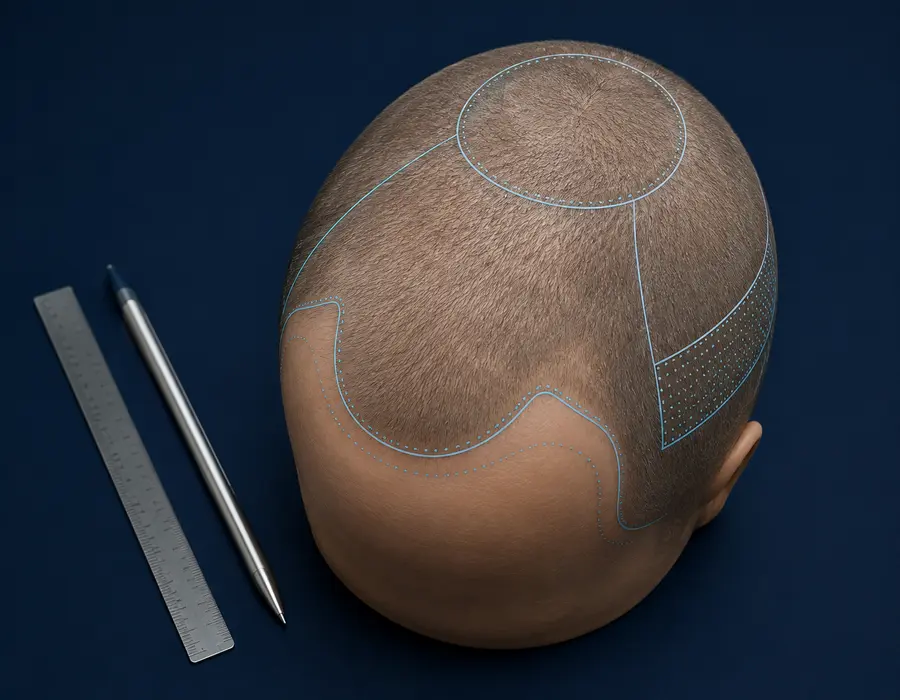
What Matters in Hair Transplantation
Hair transplantation shou

Medical Assessment & Candidacy
Suitability for hair tran

Positioning During Prolonged Procedures
Hair transplantation may

The Role of the Nurse in Telehealth-Based Hair Transplant Follow-Up
Nurse-led telehealth foll

Master’s Thesis Research: Wound Healing and Infection Prevention in Hair Transplantation
This page introduces a pu

Assessing Donor Capacity
Donor capacity cannot be

Balanced Extraction & Homogeneous Distribution
Donor preservation depend
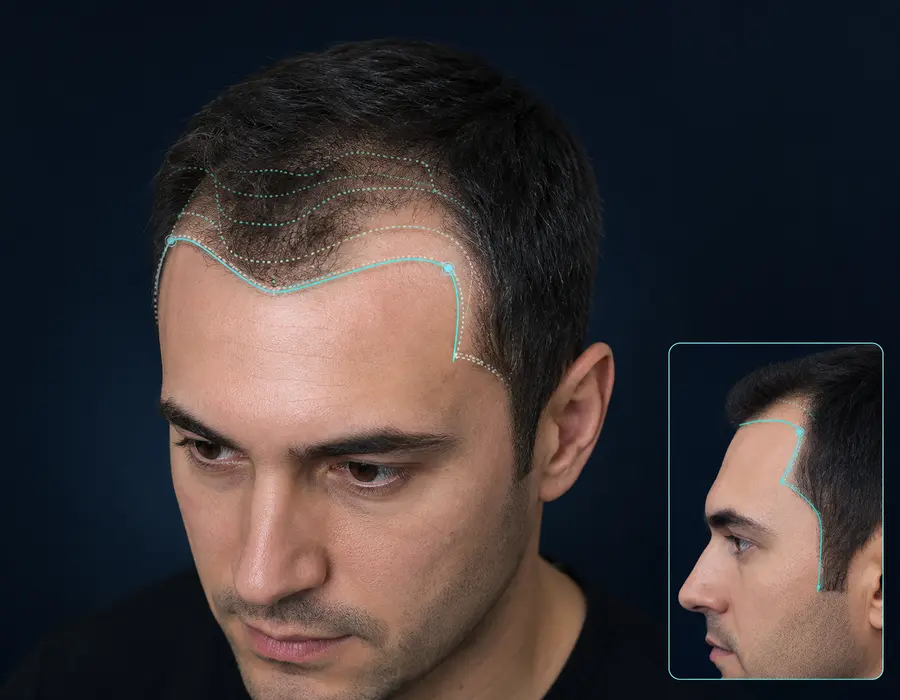
Hairline Shape & Temporal Design
Hairline shape should con

Suitability, Donor Capacity and Staged Planning
Suitability for hair tran

Non-Pharmacological Comfort Support
Comfort during a prolonge

Burn Alopecia: Nursing Care and Psychosocial Support
Burn-related alopecia may
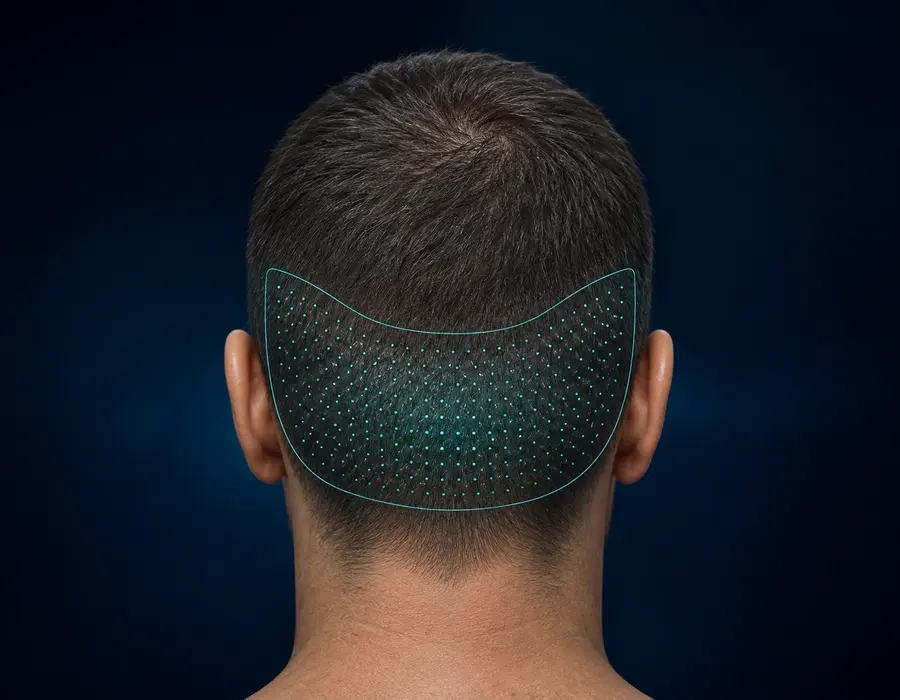
Donor Area Preservation
The donor area is a limit

Understanding FUE and DHI
FUE describes how follicu

Individualized Planning & Natural Hairline Design
Hairline design should be

Graft Numbers, Density & Distribution
A graft count alone does

Natural Irregularity & the Transition Zone
A natural-looking hairlin

Healing, Follow-Up and Realistic Expectations
Healing in scarred scalp
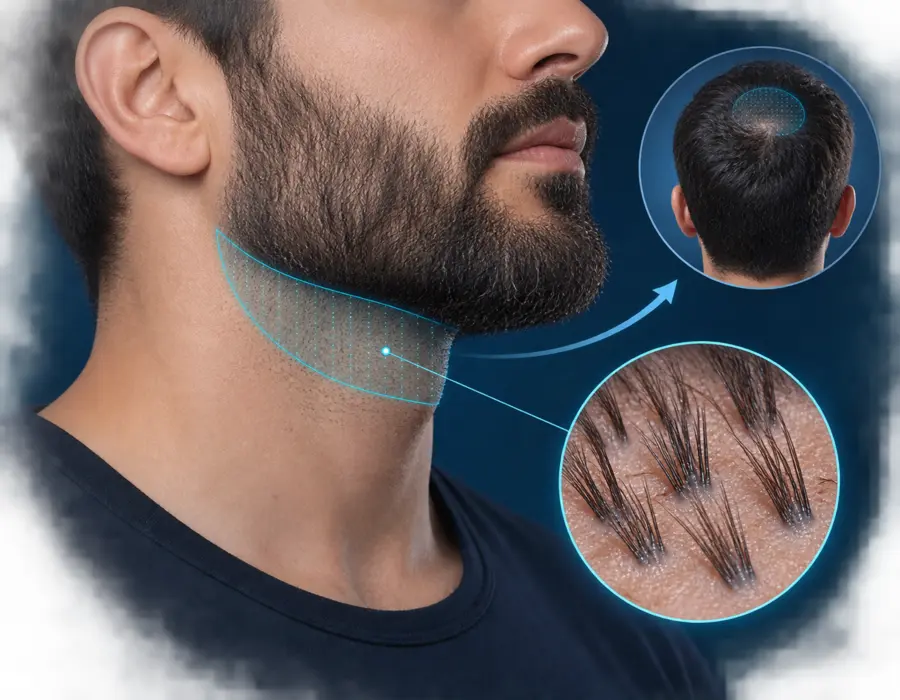
When Beard Donor May Be Considered
Beard hair may be conside

Complications, Patient Safety and Forensic Evaluation
Patient safety in hair tr

Direction, Angle & Density Transitions
Hair does not emerge from
Patient Comfort & Physiotherapy Support
Hair transplantation may

Who Performs Each Stage?
Hair transplantation invo
Aftercare & Structured Follow-Up
The period after hair tra

Planning for Women & Different Hair-Loss Patterns
Hair loss in women may pr

Risks, Limitations & Realistic Expectations
Hair transplantation is a
Long-Term Planning & Future Hair Loss
Pattern hair loss may con

Academic Research & Clinical Insights
Easesthetic’s academic fo
Hair Transplantation in Scarred Tissue
Hair transplantation in s
Frequently Asked Questions