

 Çerez Tercihleri
Tarama deneyiminizi geliştirmek, kişiselleştirilmiş içerik sunmak ve trafiğimizi analiz etmek için çerezler kullanıyoruz. Lütfen aşağıdan tercihlerinizi seçin.
Facial Proportions & Hairline Position
- Hair Transplantation Is More Than a Graft Number
- Understanding Hair Transplantation
- Facial Proportions & Hairline Position
Facial Proportions & Hairline Position
Hairline Position Is an Individual Decision
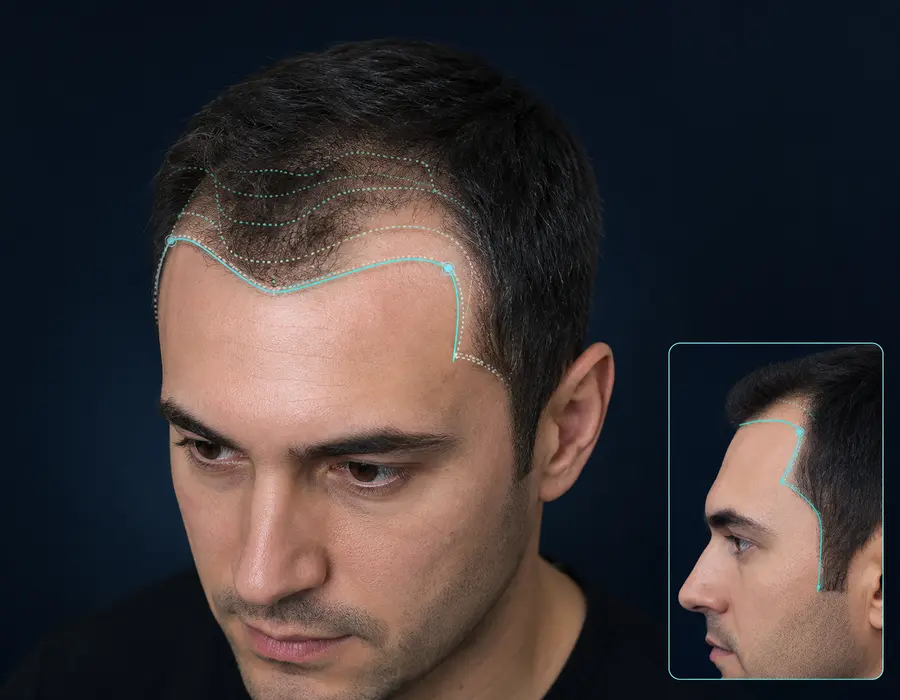
Facial proportions and hairline position should be considered together. The purpose of planning is not to reproduce a standard outline or place the hairline at a predetermined distance from the eyebrows.
An appropriate position should relate to the individual’s forehead, temples, facial structure, existing hair, age and expected pattern of future hair loss. It must also remain compatible with the available donor supply.
A hairline that appears attractive in an isolated drawing may be unsuitable when viewed as part of the entire face or considered over the longer term.
Measurements Are Guides, Not Universal Rules
Facial measurements may help organize the assessment and compare the proposed hairline from different viewing angles. They do not produce one universally correct position.
Forehead height, skull shape, eyebrow level and facial thirds vary naturally. Applying the same numerical measurement to every patient can therefore create a position that is too low, too high or disconnected from the person’s existing anatomy.
Measurements should inform clinical judgment rather than replace it.
The Entire Face Should Be Considered
Hairline planning is often discussed only in relation to the forehead. In practice, the proposal should be reviewed together with:
Overall facial length and width
Forehead height and contour
Eyebrow position
Central facial axis
Temple shape
Frontal and temporal recession
Existing hairline remnants
Skull curvature
Side-profile appearance
Hair direction and styling habits
A proposed outline may appear balanced from the front but less appropriate from the side or three-quarter view. Assessment from several angles is therefore important.
Existing Anatomy Provides Information
Remaining frontal hairs, temporal points and areas of miniaturization may provide information about the person’s previous and current hair-loss pattern.
These features should not automatically be copied. Some remaining hairs may be unstable or located outside a sustainable long-term design. They can nevertheless help explain the relationship between the forehead, temples and surrounding hair.
The proposed position should distinguish between stable anatomical references and hair that may continue to thin.
Age-Appropriate Does Not Mean Age-Based Templates
Age is relevant, but chronological age alone cannot determine hairline position. Two people of the same age may have different facial proportions, hair-loss patterns, family histories and donor capacity.
The important question is whether the proposed hairline can continue to appear coherent as the person ages and native hair loss progresses.
An unusually low or juvenile outline may require more grafts, consume donor resources and become visually isolated if surrounding native hair continues to recede. A conservative position may provide greater flexibility, but it must still be assessed individually.
Future Hair Loss Changes the Context
Hair transplantation redistributes available follicles; it does not stop untreated progressive hair loss.
A hairline should therefore be considered as the front boundary of a longer-term plan rather than as an independent cosmetic feature. Planning may include:
The expected progression of frontal and mid-scalp thinning
Existing miniaturization behind the proposed line
Family history
Age and rate of change
Medical management where clinically appropriate
Remaining donor capacity
Possible future treatment priorities
No clinician can predict future hair loss with complete certainty. The plan should acknowledge this uncertainty instead of implying permanent control over every surrounding hair.
Lower Is Not Automatically Better
Moving the hairline lower increases the surface area that may require coverage. This can affect both the number of grafts needed initially and the resources available for areas that may thin later.
A lower position may also alter the relationship between the forehead, temples and side profile. The visual effect should be assessed across the whole face rather than judged only from a close frontal photograph.
The objective is not to create the lowest technically possible line. It is to identify a position that is proportionate, sustainable and consistent with the broader plan.
Natural Asymmetry Should Be Recognized
Human faces and natural hairlines are not perfectly symmetrical. Differences may exist in eyebrow height, temporal recession, skull shape, forehead curvature and muscle movement.
The central facial axis and other reference points may assist planning, but forcing both sides into exact mirror symmetry can produce an artificial appearance.
Any asymmetry should first be identified and discussed. The final design may respect part of the existing asymmetry, make a measured adjustment or combine both approaches depending on the individual anatomy.
Static and Dynamic Assessment
The forehead can be assessed both at rest and during facial movement. Raising the eyebrows may help identify the transition between more mobile forehead skin and the upper scalp, but this observation should not be treated as a universal formula for positioning the hairline.
Muscle movement, skin mobility and facial expression vary between individuals. They provide supplementary anatomical information rather than a single definitive boundary.
Planning should be reviewed again with the face relaxed.
Frontal and Temporal Areas Form One Design
The central frontal line should not be designed without considering the temple transitions. Their height, width, recession pattern and relationship with the side hair influence the overall frame of the face.
A broad central line combined with incompatible temple geometry may appear disconnected. Conversely, aggressive temporal closure can increase graft demand and may not remain appropriate if hair loss progresses.
Frontal and temporal planning should therefore be evaluated as connected elements, even when treatment priorities differ between these regions.
Position and Shape Are Different Decisions
Hairline position describes where the proposed boundary begins. Hairline shape describes how that boundary moves across the forehead and connects with the temples.
A suitable position does not automatically create a suitable shape. Shape may be influenced by:
Forehead width
Existing recession
Facial contour
Temple anatomy
Hair calibre and curl
Donor characteristics
Recipient-area size
Long-term graft availability
Both decisions should be documented and reviewed before the procedure.
A Drawing Is Not a Predicted Result
A preoperative outline communicates the intended position and general design. It does not demonstrate the final density, growth, texture or appearance.
The visible outcome can be influenced by donor characteristics, graft availability, existing hair, healing, progressive hair loss and individual biological response.
Computer simulations and digitally altered images may help explain a concept, but they should not be interpreted as guarantees.
Documentation Supports Clear Discussion
Standardized photographs from the front, both sides, three-quarter views and above may help compare the proposal across different angles.
Useful documentation may include:
The relaxed facial position
Existing frontal and temporal hair
Areas of miniaturization
The proposed central point
Temple transitions
Relevant facial reference lines
Alternative positions discussed
The agreed design before the procedure
Documentation supports communication but does not replace direct examination or informed consent.
Questions Worth Asking
Before agreeing to a proposed hairline, patients may wish to ask:
Which anatomical features influenced the proposed position?
Was the design reviewed from the front, side and three-quarter views?
How were the temples considered?
Does existing hair behind the line show miniaturization?
How might future hair loss affect the appearance?
How does lowering the line change graft requirements?
Is the proposal compatible with the available donor capacity?
Are natural facial asymmetries being recognized?
Who is responsible for the final hairline design?
Will the agreed design be documented before the procedure?
What parts of the plan may need to change after direct examination?
The explanation should relate to the individual rather than a standard template or a fixed numerical rule.
The Central Principle
An individualized hairline is not defined by perfect symmetry, the lowest possible position or a fashionable outline.
Its position should integrate facial proportions, existing anatomy, age, likely hair-loss progression and finite donor resources. The design should be understandable from several viewing angles and remain coherent within a longer-term plan.
Final suitability and positioning require direct medical assessment. Website information, photographs and measurements alone cannot determine an appropriate hairline for an individual.
Educational References
International Society of Hair Restoration Surgery — The Recipient Site: Where the Science and Art of Hair Transplant Are Applied
International Society of Hair Restoration Surgery — Using Your Hair to Create Your Uniquely Individual Hair Restoration
International Society of Hair Restoration Surgery — Follow-Up Hair Restoration Procedures
International Society of Hair Restoration Surgery — Beware of Unlicensed Technicians Performing Hair Restoration Surgery
External sources are provided for general educational reference. No affiliation or endorsement is implied.
This content is intended for general educational purposes and does not replace an individualized medical examination, diagnosis or treatment plan.
Diğer Hizmetler

Understanding Scarred Scalp Tissue
Scarred scalp tissue may

Facial Proportions & Hairline Position
Hairline position should
What Matters in Hair Transplantation
Hair transplantation shou

Medical Assessment & Candidacy
Suitability for hair tran

Positioning During Prolonged Procedures
Hair transplantation may

The Role of the Nurse in Telehealth-Based Hair Transplant Follow-Up
Nurse-led telehealth foll

Master’s Thesis Research: Wound Healing and Infection Prevention in Hair Transplantation
This page introduces a pu

Assessing Donor Capacity
Donor capacity cannot be

Balanced Extraction & Homogeneous Distribution
Donor preservation depend
Hairline Shape & Temporal Design
Hairline shape should con

Suitability, Donor Capacity and Staged Planning
Suitability for hair tran

Non-Pharmacological Comfort Support
Comfort during a prolonge

Burn Alopecia: Nursing Care and Psychosocial Support
Burn-related alopecia may
Donor Area Preservation
The donor area is a limit

Understanding FUE and DHI
FUE describes how follicu

Individualized Planning & Natural Hairline Design
Hairline design should be

Graft Numbers, Density & Distribution
A graft count alone does

Natural Irregularity & the Transition Zone
A natural-looking hairlin

Healing, Follow-Up and Realistic Expectations
Healing in scarred scalp
When Beard Donor May Be Considered
Beard hair may be conside

Complications, Patient Safety and Forensic Evaluation
Patient safety in hair tr

Direction, Angle & Density Transitions
Hair does not emerge from
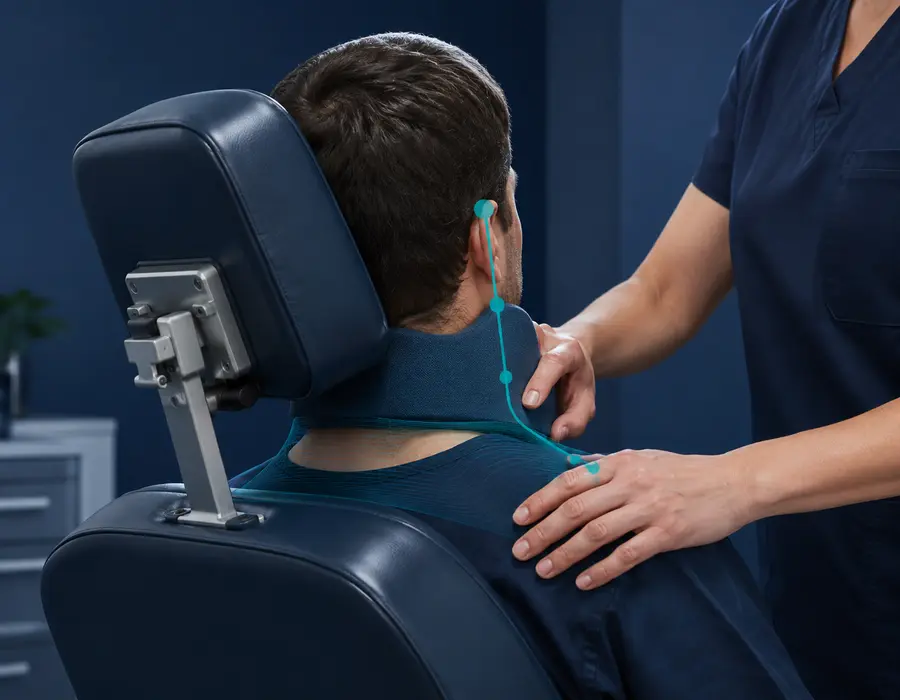
Patient Comfort & Physiotherapy Support
Hair transplantation may

Who Performs Each Stage?
Hair transplantation invo
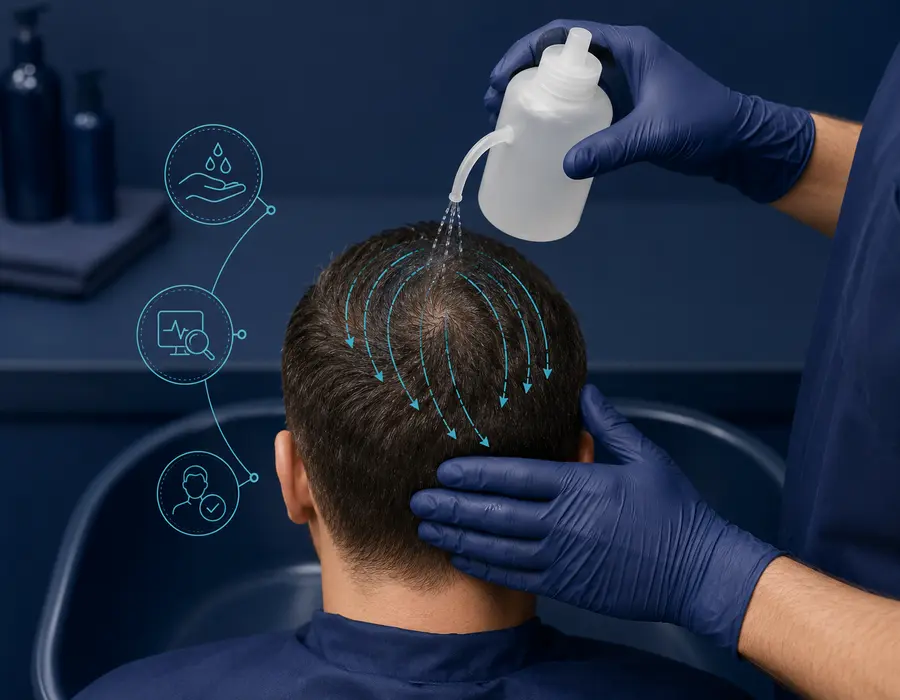
Aftercare & Structured Follow-Up
The period after hair tra

Planning for Women & Different Hair-Loss Patterns
Hair loss in women may pr

Risks, Limitations & Realistic Expectations
Hair transplantation is a
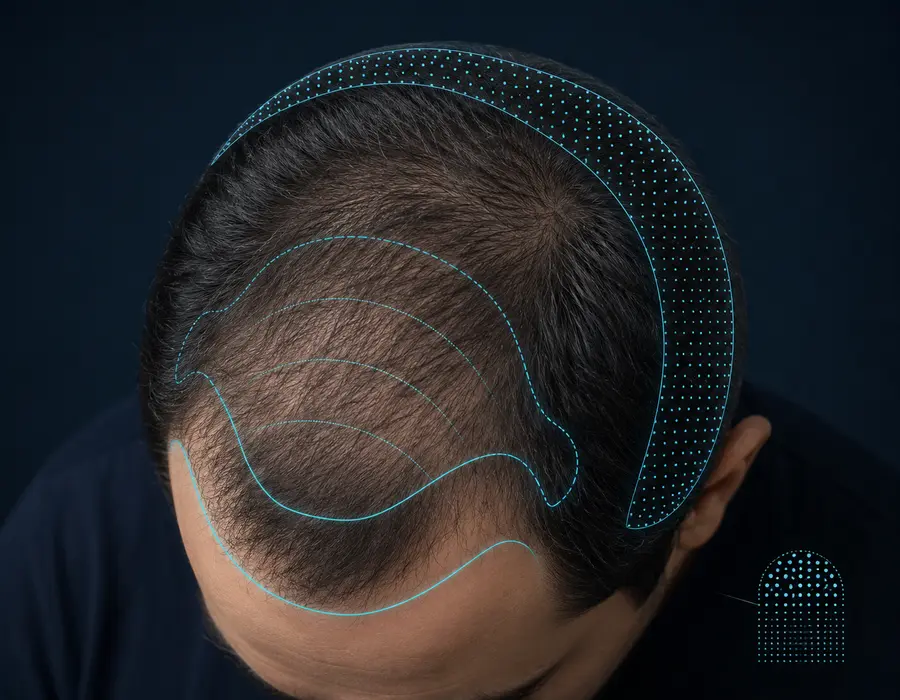
Long-Term Planning & Future Hair Loss
Pattern hair loss may con

Academic Research & Clinical Insights
Easesthetic’s academic fo
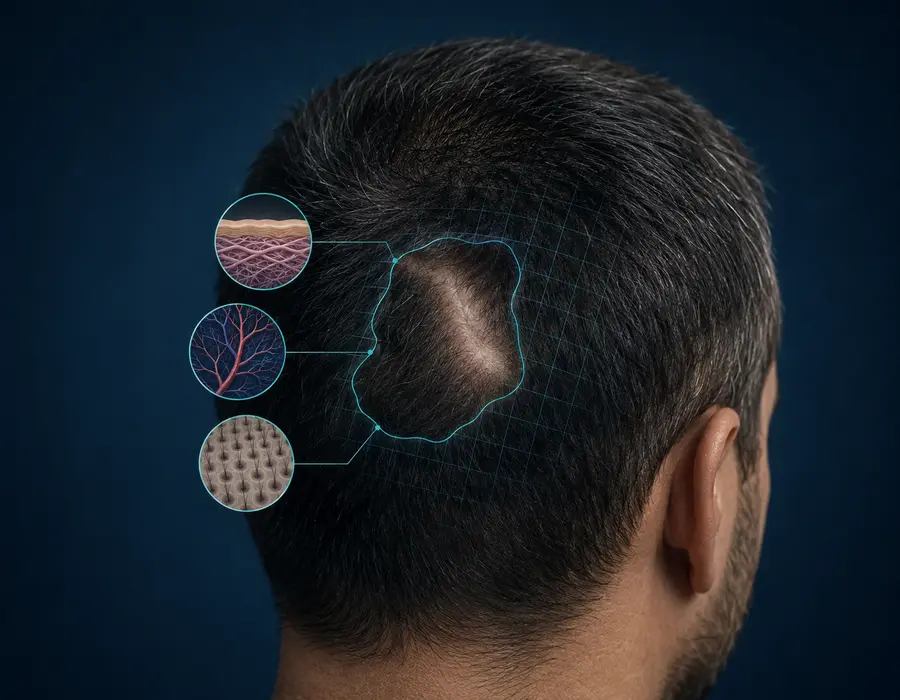
Hair Transplantation in Scarred Tissue
Hair transplantation in s
Frequently Asked Questions