

 Çerez Tercihleri
Tarama deneyiminizi geliştirmek, kişiselleştirilmiş içerik sunmak ve trafiğimizi analiz etmek için çerezler kullanıyoruz. Lütfen aşağıdan tercihlerinizi seçin.
Balanced Extraction & Homogeneous Distribution
- Hair Transplantation Is More Than a Graft Number
- Understanding Hair Transplantation
- Balanced Extraction & Homogeneous Distribution
Balanced Extraction & Homogeneous Distribution
Extraction Is Also a Distribution Plan
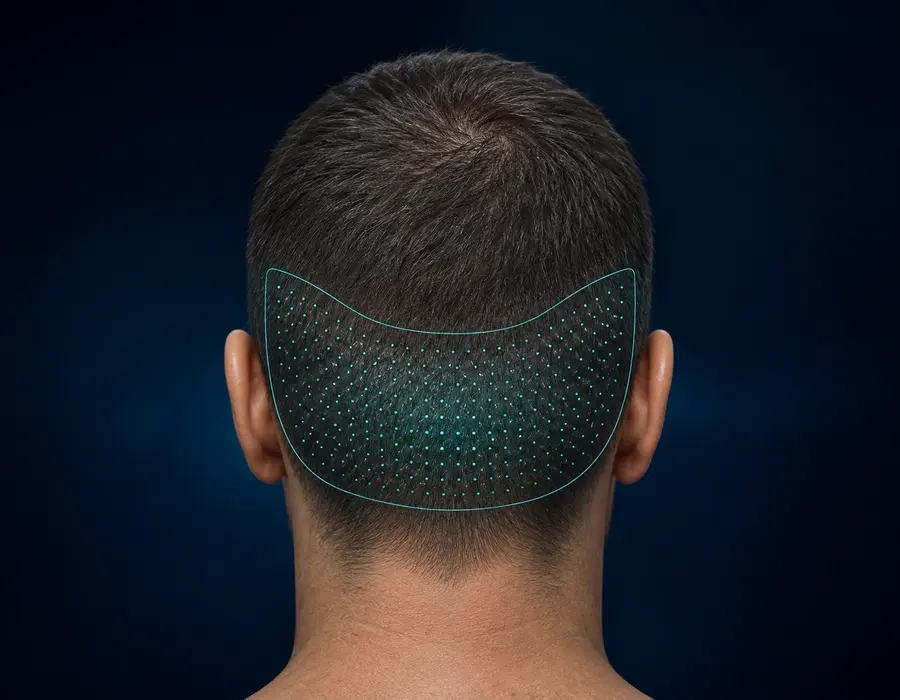
In follicular unit excision, individual follicular units are selected from the donor area. This means that donor management involves more than deciding how many grafts may be required. It also requires deciding where those units can be selected and how their removal should be distributed across the available donor region.
A large numerical estimate does not automatically indicate an appropriate plan. The remaining appearance of the donor area, its biological limits and possible future needs should be considered alongside the intended recipient-area coverage.
What Does Homogeneous Distribution Mean?
Homogeneous distribution does not mean removing follicular units according to a rigid geometric pattern or using identical spacing in every patient.
Natural donor density is not perfectly uniform. Hair calibre, follicular-unit composition, growth direction and scalp visibility may vary between different parts of the same donor area. A balanced plan therefore adapts to these variations rather than treating the entire scalp as an identical surface.
The objective is to avoid excessive concentration in a limited region while preserving a visually balanced appearance throughout the donor area.
Local Density Matters
Average donor density can provide useful information, but an average value may conceal important regional differences.
One area may contain dense, coarse hair with limited scalp visibility, while another may have finer hair or lower natural density. Removing the same proportion from both regions could produce different visual effects.
For this reason, donor assessment should examine multiple zones and consider:
Local follicular-unit density
The number of hairs within follicular units
Hair-shaft calibre
Hair and skin colour contrast
Curl or wave characteristics
Growth direction
Existing miniaturization
Scalp visibility
Previous extraction or scarring
These findings help determine where follicular units may be selected without creating concentrated depletion.
Respecting Donor Boundaries
The long-term stability of hair can vary across the back and sides of the scalp. Expanding extraction beyond appropriately assessed donor boundaries solely to increase the available graft number may expose the patient to future thinning or an uneven donor appearance.
The boundaries of a suitable donor region cannot be determined from a standard diagram alone. Age, hair-loss pattern, family history, miniaturization and the expected progression of hair loss may all influence the assessment.
A responsible plan should therefore prioritize biological suitability over the largest possible extraction field.
Visual Density Is Not the Same as Graft Count
Two patients with the same number of remaining follicular units may not have the same visible donor density.
Coarse, wavy or low-contrast hair may provide greater visual coverage than fine, straight or high-contrast hair. Short hairstyles can also make changes in donor density and small FUE scars more noticeable.
This is why numerical graft counts should not be interpreted in isolation. The visual consequences of extraction must be considered together with the patient’s hair characteristics and hairstyle preferences.
Avoiding Concentrated Depletion
When too many follicular units are selected from a restricted area, the remaining hair may no longer provide adequate visual coverage. This can produce patchiness, excessive scalp visibility or an irregular donor pattern.
Balanced extraction generally requires follicular units to be selected across appropriate donor zones while leaving sufficient surrounding units intact. The pattern should respond to local density rather than attempting to obtain the maximum possible number from the easiest area to access.
Homogeneous donor management is therefore not simply an aesthetic detail. It is part of preserving the donor area as a limited biological resource.
Follicular-Unit Selection
Follicular units naturally contain different numbers of hairs. Their selection may be influenced by both the donor-area plan and the requirements of the recipient area.
However, repeatedly targeting particular types of follicular units from one limited region may alter the appearance of the remaining donor hair. Selection should therefore consider both the usefulness of the grafts and the effect their removal may have on the donor area.
The objective is not to remove every technically accessible unit. It is to create an appropriate balance between current needs and what should remain.
Instrument and Spacing Considerations
FUE does not create a linear donor scar, but it is not a scar-free procedure. Each follicular-unit excision produces a small healing site. The visibility of these sites can be influenced by factors such as instrument selection, spacing, skin characteristics, healing response and the number and distribution of extractions.
There is no single punch size, spacing rule or extraction percentage that is appropriate for every patient. These decisions require individualized medical and technical assessment.
Previous Procedures Change the Plan
A donor area that has already undergone FUE should not be evaluated as though it were untreated.
Previous extraction patterns may be difficult to recognize when the hair is long. Examination with appropriate magnification and, when necessary, comparison with previous documentation can help identify areas of reduced density, scarring or uneven harvesting.
Further extraction from an already depleted region may make existing irregularities more visible. Previous procedure reports, graft estimates and donor photographs may therefore be relevant to future planning.
Future Hair Loss Should Be Considered
The donor area may need to support more than one stage of treatment during a person’s lifetime. Progressive hair loss, changing priorities or the need for revision may create future demand.
Using a large proportion of the available donor supply for a single short-term objective can reduce later options. A conservative plan may intentionally leave part of the donor capacity unused.
Preservation does not mean that every patient will require another procedure. It means avoiding unnecessary limitation of future choices.
Questions Worth Asking
Before proceeding, patients may wish to ask:
How was the donor area assessed?
Were different donor zones measured separately?
Is there evidence of miniaturization within the proposed donor region?
How will extraction be distributed?
How will concentrated depletion be avoided?
Have previous procedures changed the available donor capacity?
Could the planned pattern become visible with a shorter hairstyle?
How are future hair-loss progression and possible future needs considered?
Who is responsible for planning and monitoring donor extraction?
How will the donor area be reviewed after the procedure?
Clear answers should relate to the individual donor area rather than relying solely on a predetermined graft package.
The Central Principle
Balanced extraction is not defined by obtaining the greatest possible number of grafts. It is defined by selecting an appropriate number from appropriate locations while preserving a coherent donor appearance.
A well-considered donor plan integrates quantity, distribution, biological stability and long-term strategy. The final decision requires an individualized medical assessment and cannot be made from photographs or general website information alone.
Educational References
International Society of Hair Restoration Surgery — FUE: What Is It?
International Society of Hair Restoration Surgery, Fight the Fight — Beware of the Risks
International Society of Hair Restoration Surgery — A Guide to Hair Transplant for Women
External sources are provided for general educational reference. No affiliation or endorsement is implied.
This content is intended for general educational purposes and does not replace an individualized medical examination, diagnosis or treatment plan.
Diğer Hizmetler

Understanding Scarred Scalp Tissue
Scarred scalp tissue may

Facial Proportions & Hairline Position
Hairline position should
What Matters in Hair Transplantation
Hair transplantation shou

Medical Assessment & Candidacy
Suitability for hair tran

Positioning During Prolonged Procedures
Hair transplantation may

The Role of the Nurse in Telehealth-Based Hair Transplant Follow-Up
Nurse-led telehealth foll

Master’s Thesis Research: Wound Healing and Infection Prevention in Hair Transplantation
This page introduces a pu

Assessing Donor Capacity
Donor capacity cannot be

Balanced Extraction & Homogeneous Distribution
Donor preservation depend
Hairline Shape & Temporal Design
Hairline shape should con

Suitability, Donor Capacity and Staged Planning
Suitability for hair tran

Non-Pharmacological Comfort Support
Comfort during a prolonge

Burn Alopecia: Nursing Care and Psychosocial Support
Burn-related alopecia may
Donor Area Preservation
The donor area is a limit

Understanding FUE and DHI
FUE describes how follicu

Individualized Planning & Natural Hairline Design
Hairline design should be

Graft Numbers, Density & Distribution
A graft count alone does

Natural Irregularity & the Transition Zone
A natural-looking hairlin

Healing, Follow-Up and Realistic Expectations
Healing in scarred scalp
When Beard Donor May Be Considered
Beard hair may be conside

Complications, Patient Safety and Forensic Evaluation
Patient safety in hair tr

Direction, Angle & Density Transitions
Hair does not emerge from
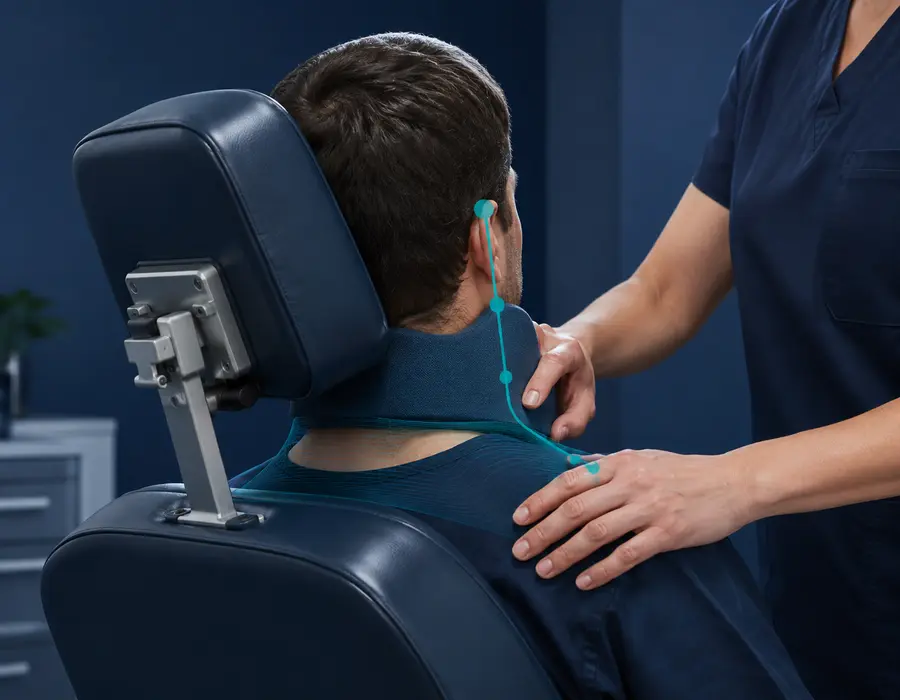
Patient Comfort & Physiotherapy Support
Hair transplantation may

Who Performs Each Stage?
Hair transplantation invo
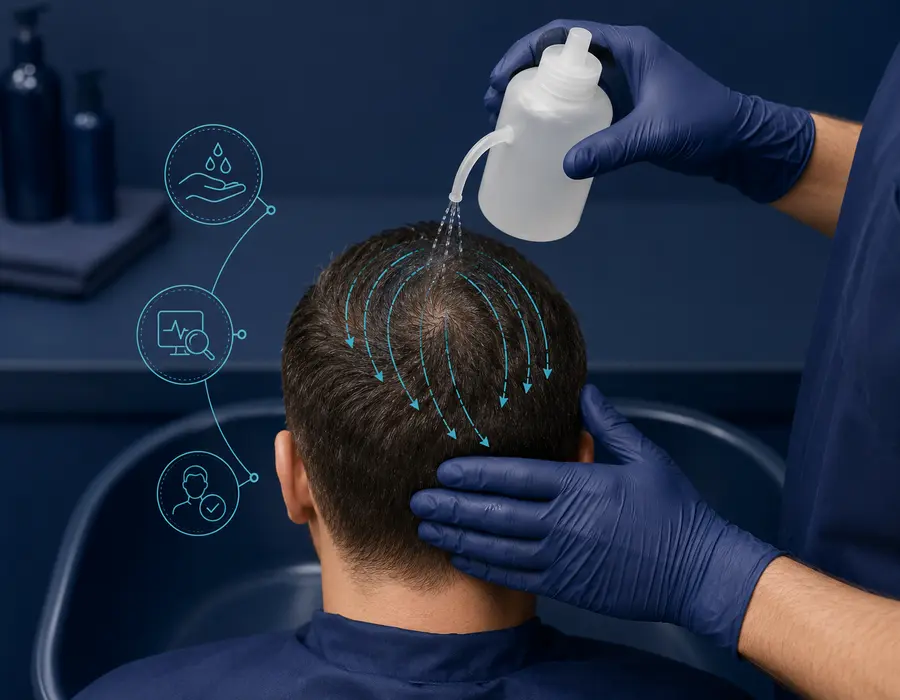
Aftercare & Structured Follow-Up
The period after hair tra

Planning for Women & Different Hair-Loss Patterns
Hair loss in women may pr

Risks, Limitations & Realistic Expectations
Hair transplantation is a
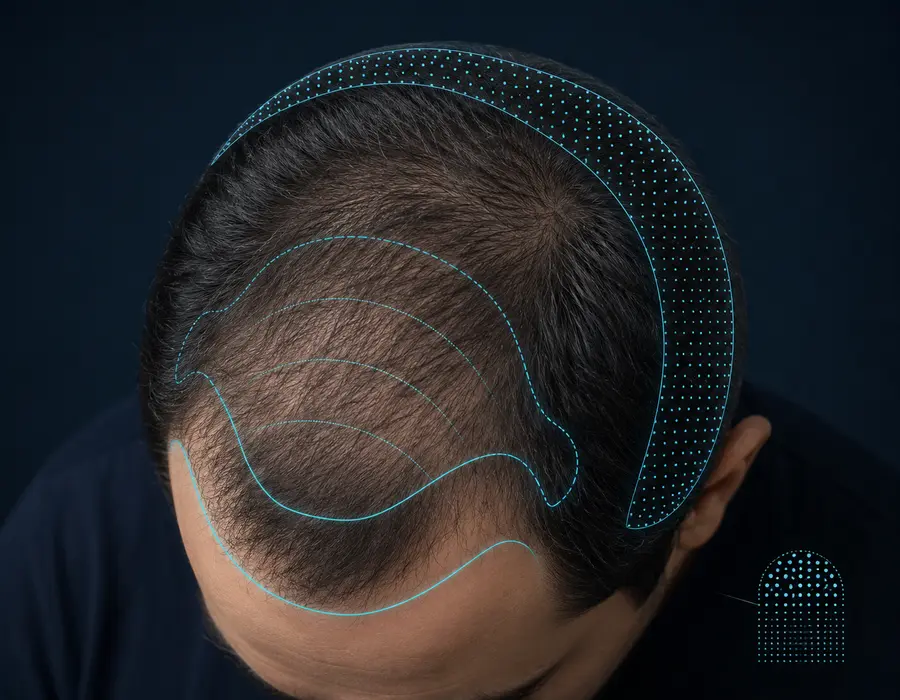
Long-Term Planning & Future Hair Loss
Pattern hair loss may con

Academic Research & Clinical Insights
Easesthetic’s academic fo
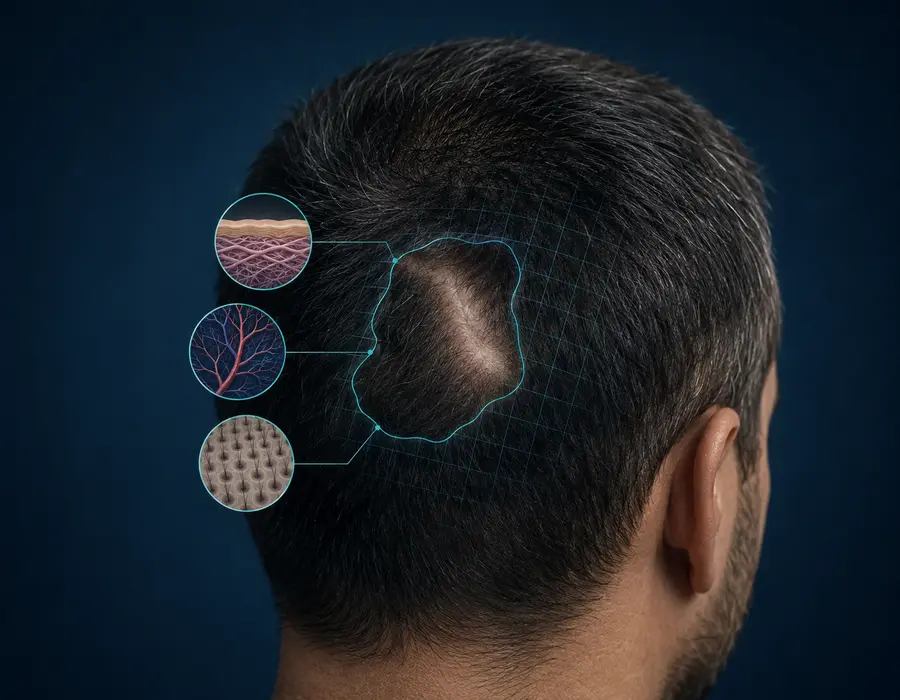
Hair Transplantation in Scarred Tissue
Hair transplantation in s
Frequently Asked Questions