

 Çerez Tercihleri
Tarama deneyiminizi geliştirmek, kişiselleştirilmiş içerik sunmak ve trafiğimizi analiz etmek için çerezler kullanıyoruz. Lütfen aşağıdan tercihlerinizi seçin.
Graft Numbers, Density & Distribution
- Hair Transplantation Is More Than a Graft Number
- Understanding Hair Transplantation
- Graft Numbers, Density & Distribution
Graft Numbers, Density & Distribution
Why Graft Count Alone Is Not Enough
Graft numbers are frequently used to compare hair transplant plans. However, the largest number is not automatically the most appropriate plan. A medically considered approach must balance the available donor supply with the size and characteristics of the recipient area, existing hair, the expected progression of hair loss and possible future needs.
The objective is not simply to transplant as many grafts as possible. It is to use a limited biological resource thoughtfully and distribute it according to individual priorities.
What Is a Graft?
A graft usually consists of one naturally occurring follicular unit. A follicular unit may contain one, two, three or occasionally more hairs.
For this reason, graft count and hair count are not the same measurement. Two individuals receiving an equal number of grafts may receive different total numbers of hairs because their follicular-unit composition may differ.
Hair calibre, colour contrast, curl, growth direction and the presence of existing hair can also influence the visual coverage associated with a particular number of grafts.
What Determines the Number of Grafts?
The number considered appropriate for an individual plan may be influenced by:
The size and location of the recipient area
The density and stability of the donor area
Hair calibre, texture and follicular-unit composition
The pattern and expected progression of hair loss
The amount and condition of existing hair
The intended position of the hairline
The relative priority of the frontal, mid-scalp and crown regions
Scalp and tissue characteristics
The need to preserve options for the future
A meaningful graft estimate should therefore follow an individual assessment rather than being selected from a standard package.
Density and Visual Coverage Are Different Concepts
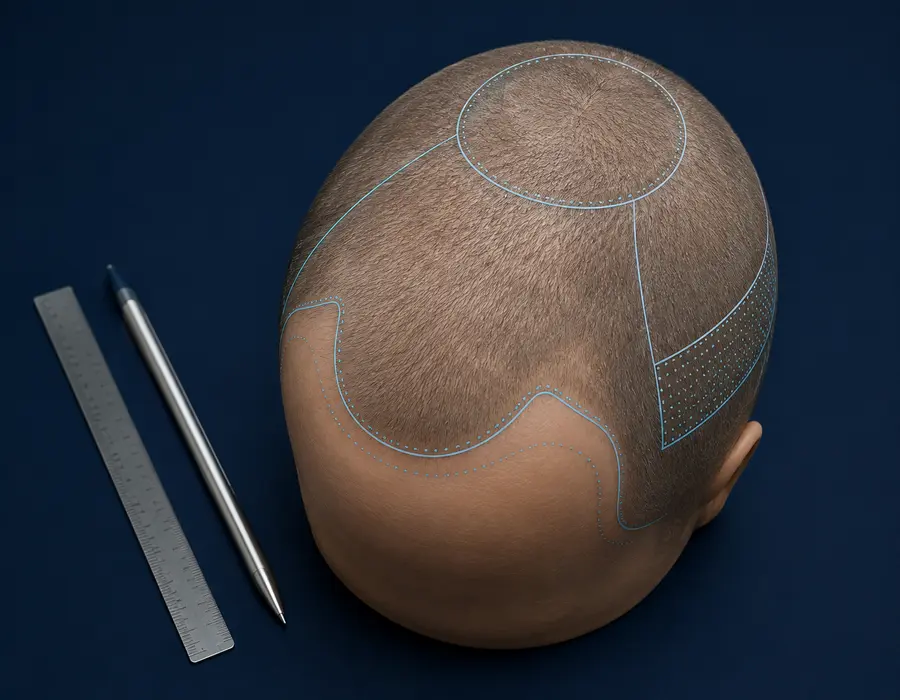
Transplant density describes how closely follicular units are placed within a particular area. Visual coverage describes how full that area may appear.
The two concepts are related, but they are not identical. Hair thickness, curl, colour contrast, shaft angle and the number of hairs within each follicular unit can influence how coverage is perceived.
Uniformly pursuing the highest possible density across every region may not be appropriate. The available donor supply may need to be distributed selectively to create visual continuity while respecting tissue conditions and long-term donor limitations.
Why Distribution Matters
Different areas of the scalp have different visual and anatomical requirements.
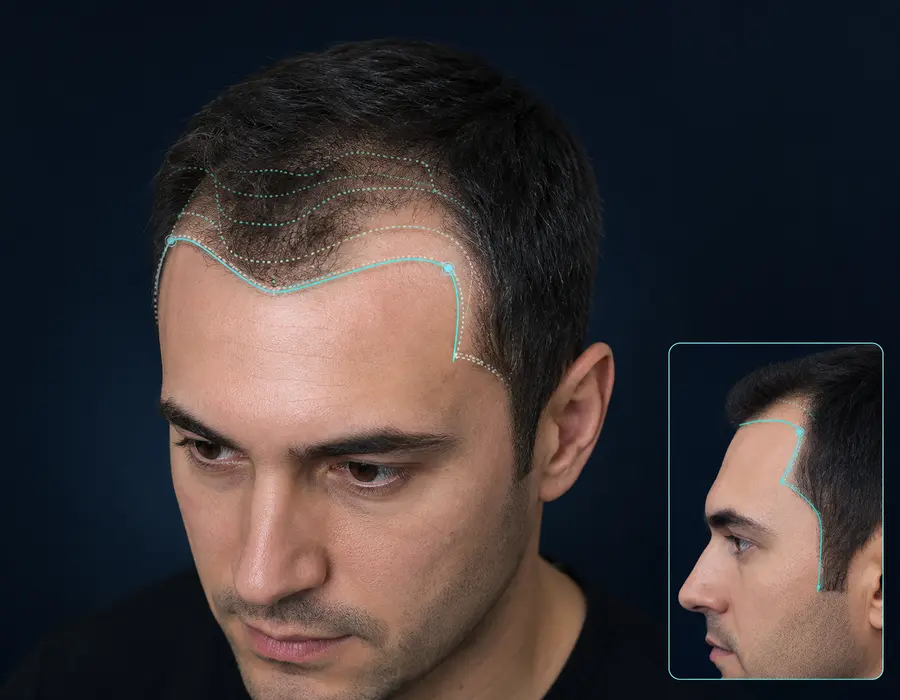
The frontal hairline generally requires finer, carefully selected follicular units and gradual transitions. Larger follicular units may be positioned behind this zone, where they can contribute more effectively to visual coverage.
The mid-scalp requires attention to direction, flow and continuity. The crown presents a different planning challenge because its spiral pattern may require a considerable number of grafts over a relatively large area.
When donor supply is limited, covering every region at the same density may not be realistic. Priorities should be discussed before the procedure and adapted to the individual pattern of hair loss.
Planning the Hairline
A natural-looking hairline is not created by forming a uniformly dense or perfectly straight border. Its position, contour, transition and relationship with facial proportions all require consideration.
Single-hair follicular units are commonly preferred at the leading edge, while units containing more hairs may be used progressively behind it. Angle, direction and spacing are as important as the number of grafts placed.
Protecting the Donor Area
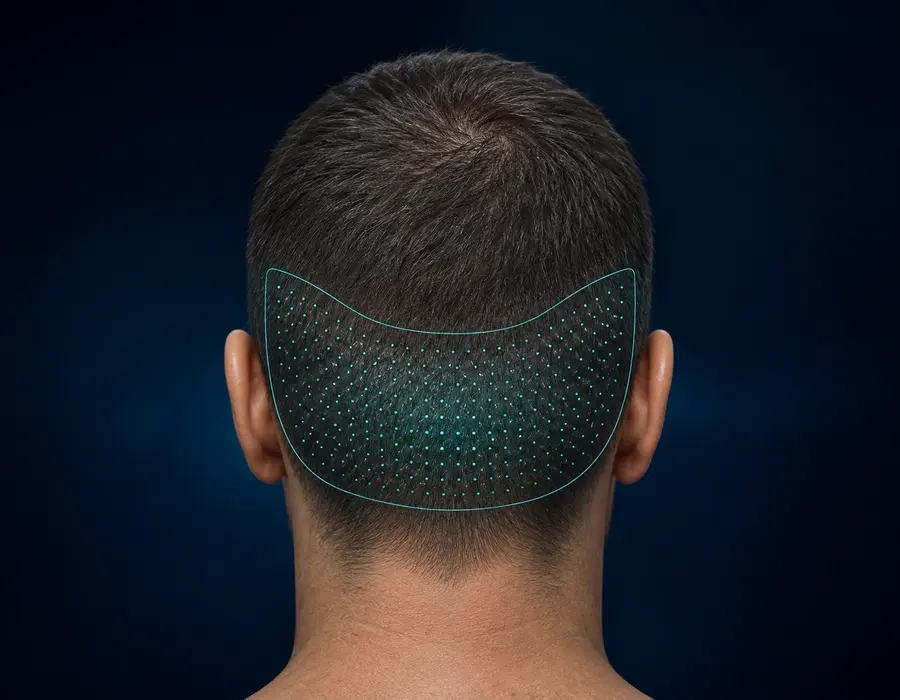
The donor area is a limited biological resource. Follicular units removed from it do not regenerate in their original locations.
Excessive or uneven harvesting may reduce visible donor density, affect future options and make short hairstyles more difficult to maintain. The proposed graft number should therefore be evaluated together with the extraction pattern and the amount of hair that will remain in the donor area.
Long-term planning is particularly important when hair loss may continue after the initial procedure.
Questions Worth Asking
Before making a decision, patients may wish to ask:
How was the proposed graft number estimated?
Is the stated figure a target or an approximate range?
How was donor capacity assessed?
Which scalp regions will receive priority?
How will single- and multiple-hair follicular units be distributed?
How are existing hair and possible future hair loss considered?
What options may remain if further hair loss occurs?
Who is responsible for designing the recipient sites and extraction pattern?
A transparent plan should explain not only how many grafts may be used, but also why that number and distribution are considered appropriate.
Hair transplantation is a surgical procedure. Graft requirements, procedural planning and medical suitability vary between individuals and should be determined through an assessment by appropriately licensed healthcare professionals.
References
International Society of Hair Restoration Surgery. The Recipient Site: Where the Science and Art of Hair Transplant Are Applied.
International Society of Hair Restoration Surgery. Hair Graft Placement: The Final Step in Hair Transplantation.
International Society of Hair Restoration Surgery. FUE Hair Transplant: Benefits, Process and Recovery.
External sources are provided for general educational reference. No affiliation or endorsement is implied.
Diğer Hizmetler

Understanding Scarred Scalp Tissue
Scarred scalp tissue may

Facial Proportions & Hairline Position
Hairline position should
What Matters in Hair Transplantation
Hair transplantation shou

Medical Assessment & Candidacy
Suitability for hair tran

Positioning During Prolonged Procedures
Hair transplantation may

The Role of the Nurse in Telehealth-Based Hair Transplant Follow-Up
Nurse-led telehealth foll

Master’s Thesis Research: Wound Healing and Infection Prevention in Hair Transplantation
This page introduces a pu

Assessing Donor Capacity
Donor capacity cannot be

Balanced Extraction & Homogeneous Distribution
Donor preservation depend
Hairline Shape & Temporal Design
Hairline shape should con

Suitability, Donor Capacity and Staged Planning
Suitability for hair tran

Non-Pharmacological Comfort Support
Comfort during a prolonge

Burn Alopecia: Nursing Care and Psychosocial Support
Burn-related alopecia may
Donor Area Preservation
The donor area is a limit

Understanding FUE and DHI
FUE describes how follicu

Individualized Planning & Natural Hairline Design
Hairline design should be

Graft Numbers, Density & Distribution
A graft count alone does

Natural Irregularity & the Transition Zone
A natural-looking hairlin

Healing, Follow-Up and Realistic Expectations
Healing in scarred scalp
When Beard Donor May Be Considered
Beard hair may be conside

Complications, Patient Safety and Forensic Evaluation
Patient safety in hair tr

Direction, Angle & Density Transitions
Hair does not emerge from
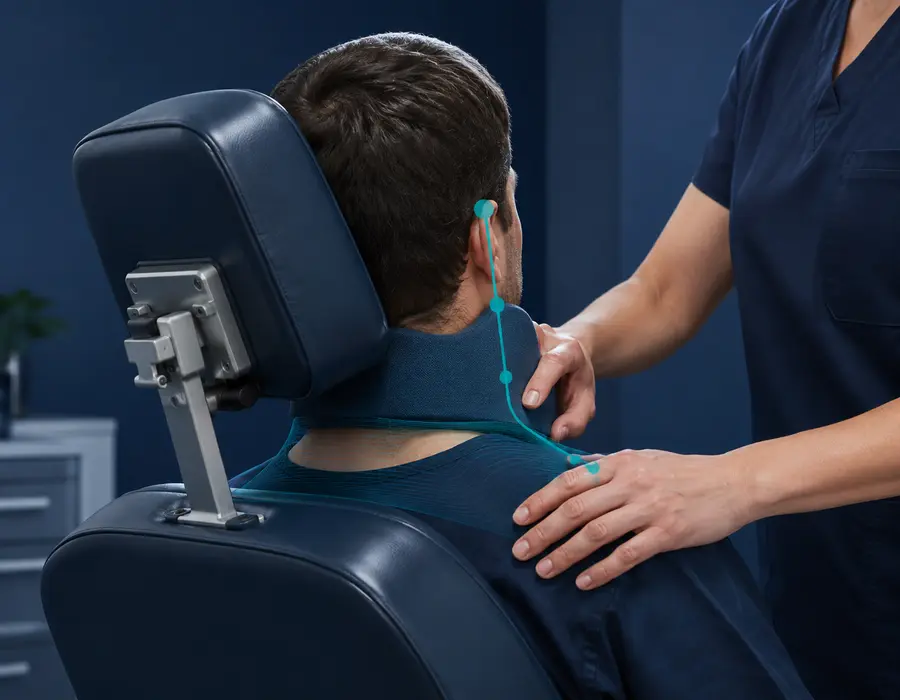
Patient Comfort & Physiotherapy Support
Hair transplantation may

Who Performs Each Stage?
Hair transplantation invo
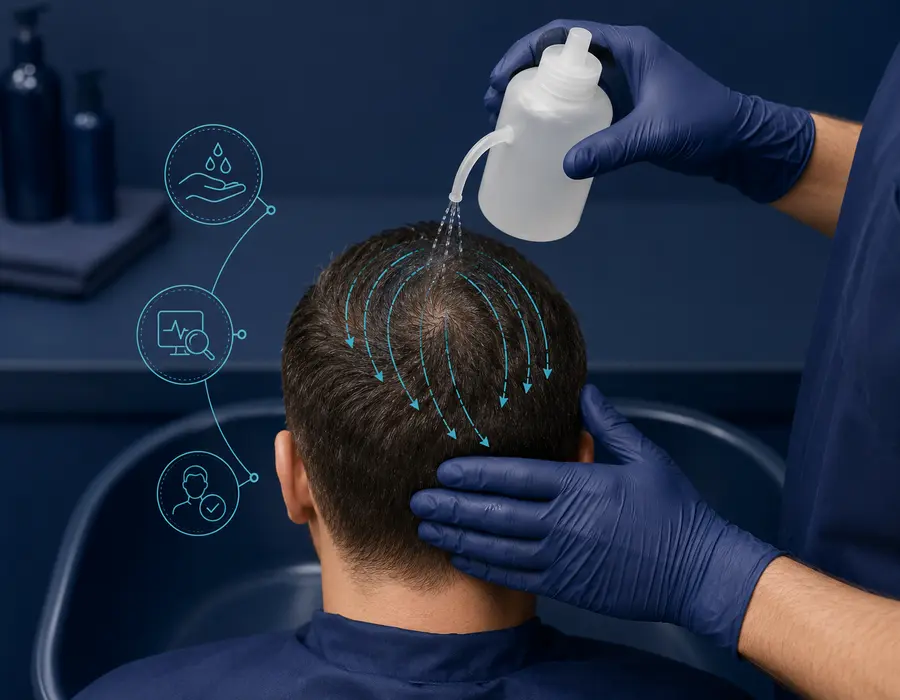
Aftercare & Structured Follow-Up
The period after hair tra

Planning for Women & Different Hair-Loss Patterns
Hair loss in women may pr

Risks, Limitations & Realistic Expectations
Hair transplantation is a
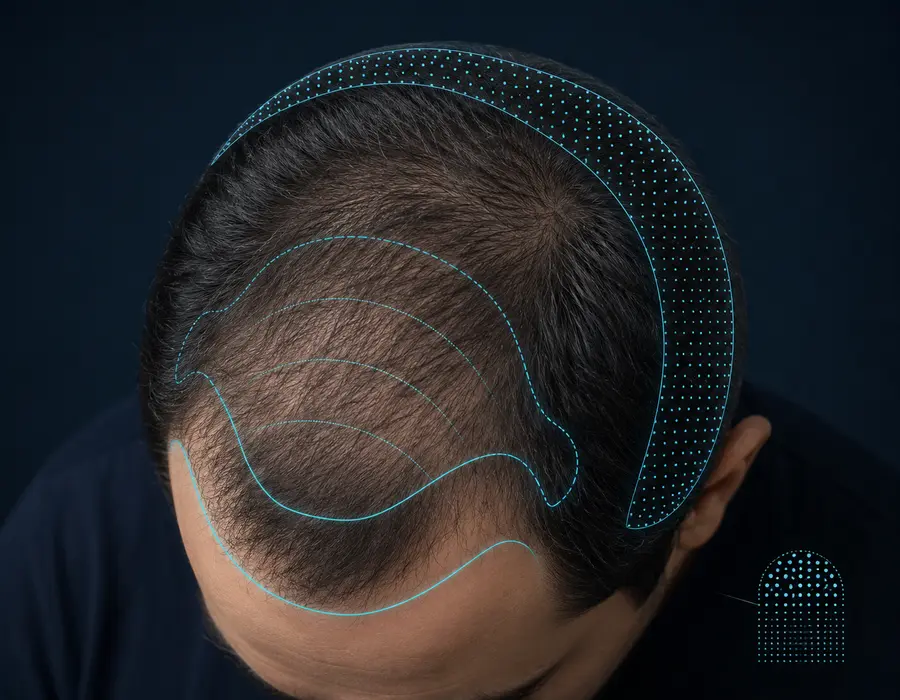
Long-Term Planning & Future Hair Loss
Pattern hair loss may con

Academic Research & Clinical Insights
Easesthetic’s academic fo
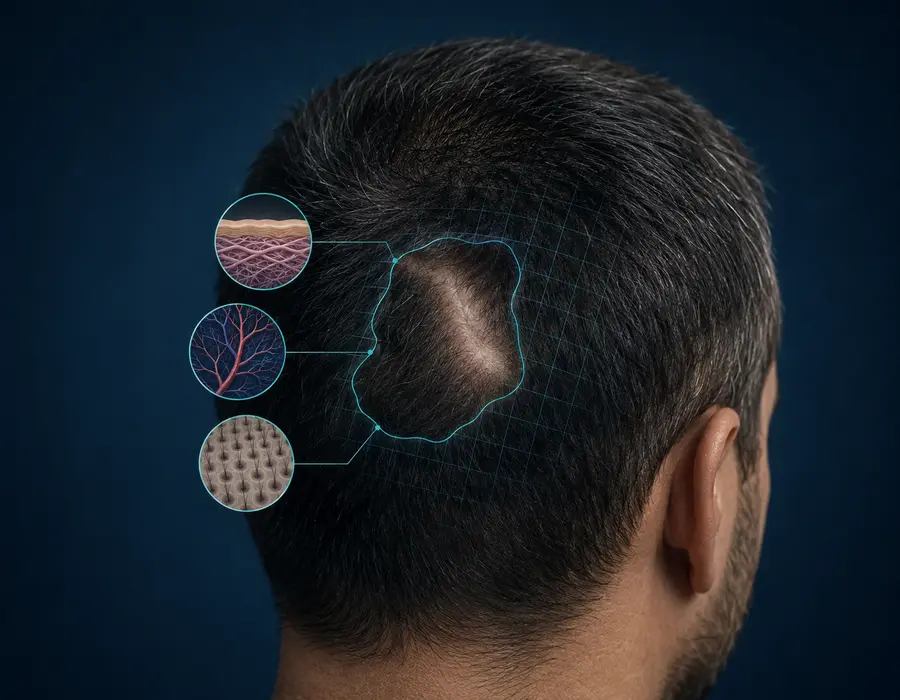
Hair Transplantation in Scarred Tissue
Hair transplantation in s
Frequently Asked Questions