

 Çerez Tercihleri
Tarama deneyiminizi geliştirmek, kişiselleştirilmiş içerik sunmak ve trafiğimizi analiz etmek için çerezler kullanıyoruz. Lütfen aşağıdan tercihlerinizi seçin.
Positioning During Prolonged Procedures
- Hair Transplantation Is More Than a Graft Number
- Understanding Hair Transplantation
- Positioning During Prolonged Procedures
Positioning During Prolonged Procedures
Positioning During Prolonged Procedures
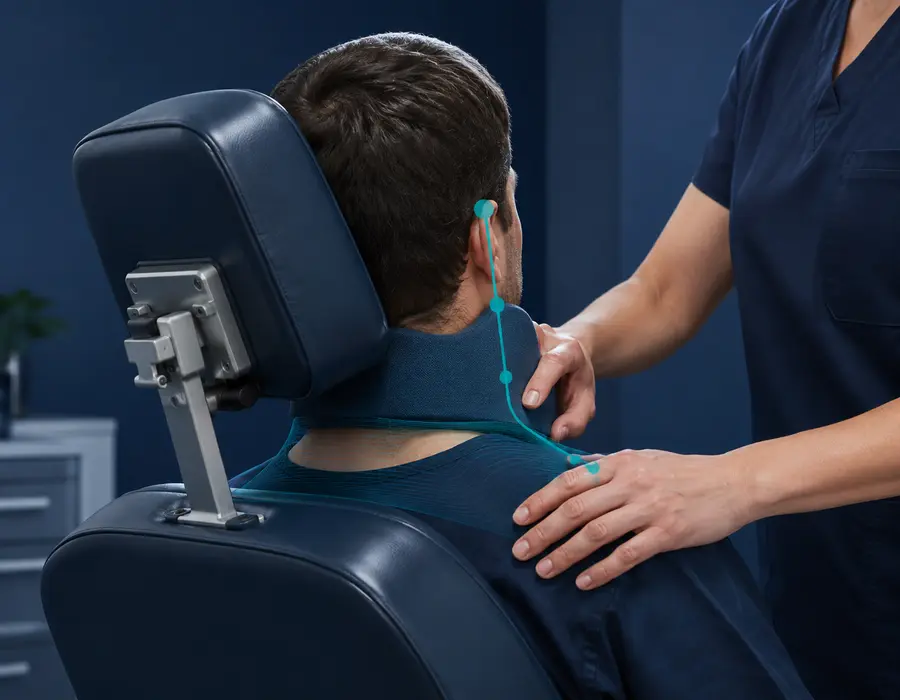
Hair transplantation may involve extended periods in which the patient remains seated, semi-reclined, prone or in another clinically required position. Although the necessary position depends on the stage of the procedure and the area being treated, prolonged limited movement may contribute to pressure, stiffness, muscle fatigue or positional discomfort.
Positioning should therefore be regarded as an individualized and continuously reviewed part of patient care rather than a one-time adjustment made at the beginning of the procedure.
Why Positioning Requires Attention
The human body is not designed to remain completely still in one position for prolonged periods. Under normal circumstances, people make frequent small movements that redistribute pressure and alter muscle activity.
When movement is restricted, discomfort may develop in areas such as:
Neck and upper shoulders
Lower back
Hips and pelvis
Elbows and forearms
Knees
Heels and ankles
Areas in direct contact with the chair or support surfaces
The location and intensity of discomfort vary between individuals. A position that is well tolerated by one person may not be suitable for another.
The Position Depends on the Procedure Stage
Different stages of hair transplantation may require access to different areas of the scalp.
The clinical team may need to balance:
Access to the donor or recipient area
Visibility of the working field
Head stability
Neck alignment
Patient breathing and communication
Protection of pressure-sensitive areas
Safe movement between stages
The medical and surgical requirements of the procedure
A comfort-support plan cannot override clinical access or procedural safety. Adjustments should be coordinated with the responsible medical team.
Pre-Procedure Positioning Assessment
Before a prolonged procedure, it may be useful to identify factors that could affect positioning tolerance.
Relevant information may include:
Previous neck or back pain
Disc-related conditions
Spinal stenosis
Shoulder problems
Hip or knee limitations
Previous surgery
Joint replacement
Neurological conditions
Numbness or altered sensation
Circulatory concerns
Diabetes
Skin vulnerability
Current pain
Difficulty lying prone or remaining semi-reclined
Use of mobility aids
Positions that regularly increase symptoms
This information does not automatically exclude a person from a particular position. It helps the team decide whether additional assessment, modified support or medical clearance may be required.
Head and Neck Alignment
The head needs to remain sufficiently stable for the clinical stage while avoiding unnecessary cervical strain where possible.
Considerations may include:
Supporting the head without excessive flexion or extension
Avoiding prolonged rotation when clinically unnecessary
Matching the head support to the person’s anatomy
Reviewing symptoms when the position changes
Preventing support surfaces from interfering with the surgical area
Reassessing the position if numbness, radiating discomfort or increasing stiffness develops
A visually straight posture is not automatically comfortable or appropriate for every patient. Neutral alignment is individualized and may be affected by existing spinal structure, mobility and symptoms.
Shoulder and Upper-Limb Support
Unsupported arms can increase load around the shoulders and upper back. Support may therefore be considered for the forearms and elbows when it does not interfere with medical equipment or procedural access.
The team may assess:
Shoulder elevation
Elbow pressure
Forearm support
Wrist position
Pre-existing shoulder limitation
Numbness or tingling in the hands
Whether the patient is unintentionally gripping or bracing
Support should not compress medical lines, restrict circulation or create a new pressure point.
Lower-Back and Pelvic Support
A prolonged seated or semi-reclined position can affect lumbar and pelvic loading.
Individual support may consider:
Chair-back angle
Lumbar contour
Pelvic position
Hip flexion
Existing lower-back symptoms
Pressure distribution beneath the pelvis
The relationship between back support and leg position
More cushioning is not always better. A support that is too thick, too soft or incorrectly positioned may alter alignment or increase pressure elsewhere.
Knee, Heel and Foot Support
Lower-limb positioning may influence comfort in the hips, knees and lower back.
Assessment may include:
Knee flexion
Support beneath the legs
Heel contact pressure
Ankle position
Foot support
Pre-existing joint restriction
Symptoms associated with prolonged stillness
Feet should not remain unsupported when the chair configuration allows appropriate support. Any change should remain compatible with procedural safety.
Pressure Distribution
Pressure-related risk depends on more than procedure duration.
Factors may include:
Length of time in one position
Body composition
Mobility limitations
Altered sensation
Skin condition
Circulatory status
Diabetes
Moisture
Friction and shear
Type and placement of support surfaces
General health and nutrition
Support surfaces can assist with pressure distribution, but they do not eliminate the need for observation and reassessment.
Small Adjustments and Repositioning
When clinically appropriate, small adjustments may help redistribute pressure and reduce sustained muscular loading.
These may include:
Minor changes in chair angle
Repositioning a cushion or support
Adjusting arm or foot support
Brief changes in joint position
Controlled micro-movements
A planned break between procedural stages
Full repositioning when required
The timing and extent of movement must be determined by the clinical team. Unplanned patient movement during a technically sensitive stage may create procedural risk.
Communication Is Part of Positioning Safety
Patients should be encouraged to report developing discomfort before it becomes difficult to tolerate.
Relevant symptoms may include:
Increasing pressure
Burning discomfort
Numbness
Tingling
Cramping
Radiating pain
Headache
Dizziness
Shortness of breath
Unusual weakness
A feeling that a limb or support has become poorly positioned
Reporting discomfort does not mean the procedure must automatically stop. It gives the team an opportunity to assess the symptom and decide whether an adjustment is appropriate.
The Role of Physiotherapy-Informed Support
A physiotherapy-informed approach may contribute to:
Pre-procedure musculoskeletal screening
Identification of position-sensitive symptoms
Individualized support selection
Observation of head, neck and trunk alignment
Pressure-distribution planning
Recognition of muscle guarding
Communication about emerging discomfort
Coordination of safe position changes
Advice concerning movement after prolonged positioning
This support remains complementary. It does not replace anesthesia, the medical procedure, physician assessment, nursing observation or physiological monitoring.
Positioning Is Not Pain Control
Positioning may reduce avoidable mechanical discomfort, but it does not anesthetize the scalp or prevent all pain.
Pain and procedural discomfort require appropriate medical evaluation and management. Local anesthesia, medication decisions and medical monitoring remain under the responsibility of authorized healthcare professionals.
A supportive position should therefore never be described as:
Replacing anesthesia
Making the procedure painless
Preventing every symptom
Eliminating medical risk
Guaranteeing that no discomfort will occur
Individual Health Conditions May Change the Plan
Some conditions may require additional precautions or consultation.
Examples include:
Significant cervical or lumbar disorders
Recent orthopedic surgery
Severe joint restriction
Neurological symptoms
Known pressure injuries
Advanced circulatory disease
Uncontrolled medical conditions
Inability to tolerate a required position
Symptoms suggesting that prolonged positioning may be unsafe
The appropriate response may involve modified support, shorter stages, additional monitoring, medical consultation or reconsideration of the planned procedure.
Questions Worth Asking
Before a prolonged procedure, patients may wish to ask:
Which positions will be required?
Approximately how long may each stage last?
Can I explain my existing neck, back or joint problems beforehand?
How will my head, arms, back and legs be supported?
What symptoms should I report immediately?
Can small position adjustments be made?
Are planned breaks possible between suitable stages?
Who will assess positional discomfort?
How are pressure-sensitive areas monitored?
What happens if I cannot tolerate the required position?
Clear communication helps establish realistic expectations and allows relevant limitations to be identified before the procedure begins.
A Supportive but Clinically Limited Approach
Positioning during a prolonged procedure requires a balance between surgical access, patient stability, medical safety and musculoskeletal comfort.
No single chair angle, cushion arrangement or posture is appropriate for everyone. Support should be individualized, monitored and modified when clinically possible.
The objective is not to promise a symptom-free experience. It is to identify avoidable mechanical stress, support the body appropriately and maintain communication throughout the procedure.
Educational References
Anesthesia: Maximizing Patient Comfort in Surgical Hair Restoration — International Society of Hair Restoration Surgery
FUE Hair Transplant: Benefits, Process and Recovery — International Society of Hair Restoration Surgery
Repositioning for Pressure Injury Prevention in Adults — Cochrane Database of Systematic Reviews
Critical Biomechanical and Clinical Insights Concerning Tissue Protection When Positioning Patients in the Operating Room — International Wound Journal
Pressure Injuries Related to the Positioning of Surgical Patients — International Wound Journal
External sources are provided for general educational reference. No affiliation or endorsement is implied.
This content is intended for general educational purposes and does not replace an individualized medical examination, diagnosis or treatment plan.
Diğer Hizmetler

Understanding Scarred Scalp Tissue
Scarred scalp tissue may

Facial Proportions & Hairline Position
Hairline position should
What Matters in Hair Transplantation
Hair transplantation shou

Medical Assessment & Candidacy
Suitability for hair tran

Positioning During Prolonged Procedures
Hair transplantation may

The Role of the Nurse in Telehealth-Based Hair Transplant Follow-Up
Nurse-led telehealth foll

Master’s Thesis Research: Wound Healing and Infection Prevention in Hair Transplantation
This page introduces a pu

Assessing Donor Capacity
Donor capacity cannot be

Balanced Extraction & Homogeneous Distribution
Donor preservation depend
Hairline Shape & Temporal Design
Hairline shape should con

Suitability, Donor Capacity and Staged Planning
Suitability for hair tran

Non-Pharmacological Comfort Support
Comfort during a prolonge

Burn Alopecia: Nursing Care and Psychosocial Support
Burn-related alopecia may
Donor Area Preservation
The donor area is a limit

Understanding FUE and DHI
FUE describes how follicu

Individualized Planning & Natural Hairline Design
Hairline design should be

Graft Numbers, Density & Distribution
A graft count alone does

Natural Irregularity & the Transition Zone
A natural-looking hairlin

Healing, Follow-Up and Realistic Expectations
Healing in scarred scalp
When Beard Donor May Be Considered
Beard hair may be conside

Complications, Patient Safety and Forensic Evaluation
Patient safety in hair tr

Direction, Angle & Density Transitions
Hair does not emerge from
Patient Comfort & Physiotherapy Support
Hair transplantation may

Who Performs Each Stage?
Hair transplantation invo
Aftercare & Structured Follow-Up
The period after hair tra

Planning for Women & Different Hair-Loss Patterns
Hair loss in women may pr

Risks, Limitations & Realistic Expectations
Hair transplantation is a
Long-Term Planning & Future Hair Loss
Pattern hair loss may con

Academic Research & Clinical Insights
Easesthetic’s academic fo
Hair Transplantation in Scarred Tissue
Hair transplantation in s
Frequently Asked Questions